|
|
 |

|
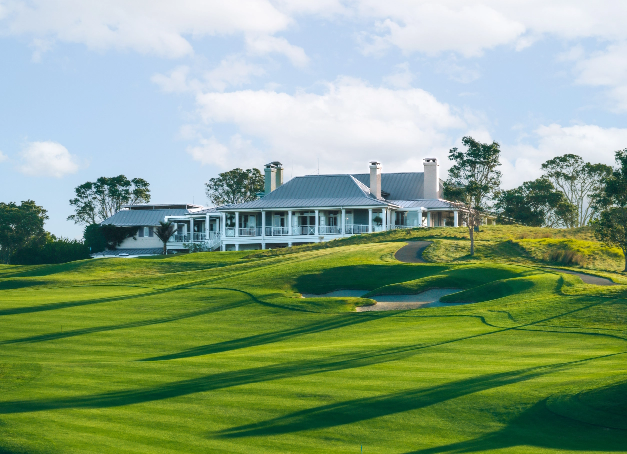
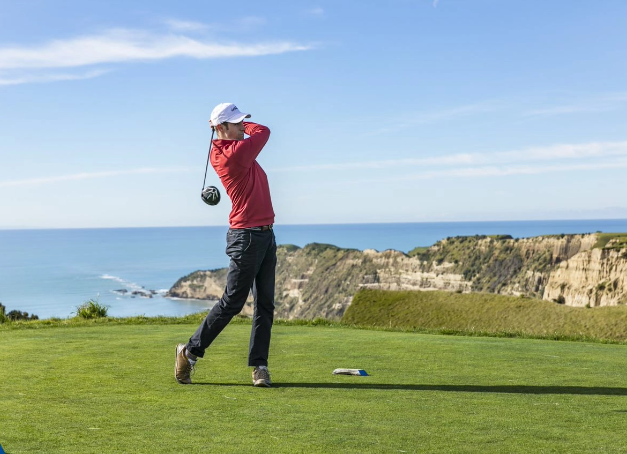
Designed by legendary golf architect Tom Doak, the Cape Kidnappers par 71 golf course measures 7,119 yards (6,510 meters) and will challenge golfers of all skill levels.
Completed in 2004, our spectacular New Zealand golf course has been hailed as one of the great modern marvels in golf. Cape Kidnappers golf course is currently ranked the 41st best golf course in the world by Golf Magazine. See below for the interactive course guide or click here for our Hawke's Bay golf course green fees.
Our well equipped Pro Shop is located at the Clubhouse, with an attractive selection of golf and casual wear available. You'll also find Callaway ladies’ and men’s clubs available for rent.
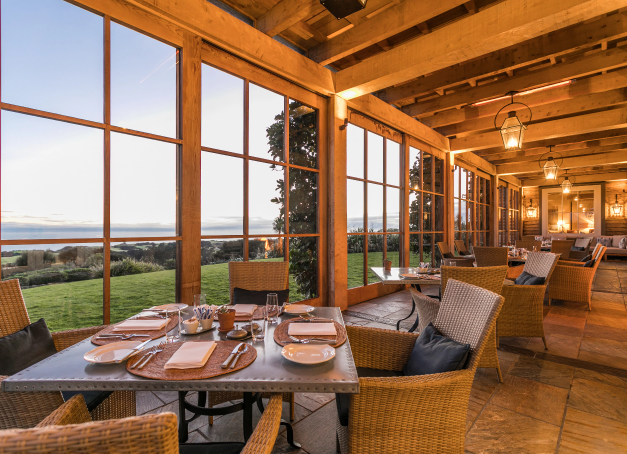
The womens' and mens' locker rooms are fully appointed with lockers and showers, and are located next to the Pro Shop. Should you wish to have a small packed lunch between the nines, an order can be placed with the Pro Shop before teeing off. Additionally, a full lunch menu is available in the Clubhouse dining room. Learn more about the Kiwi Challenge here.
The Holes
This interactive guide has been designed with comments by Tom Doak to give you insight on how to play the course.
To view extended information about the course, activate the map by clicking on it, and then click on the number of any particular hole.
|
|
|
|
|
|
|
|
|
|
|
|
|
|
|
|
 |
1. First
A difficult opening hole is a prelude of things to come. The right half of the fairway offers a better angle into the green, but don't try to cut the corner of the dogleg where a deep gully lies in wait. Short hitters must beware the gully on their second shots, but once over it, there is plenty of room to the right of the flag.
|
|
|
|
|
 |
2. Sheds
You must avoid two sets of fairway bunkers here, or you won't reach this green in regulation. Play the drive safely to the left, and lay up short of the cross bunkers if you're not sure you can carry them with your second shot. The green is open on the left, but it tilts sharply to the right so it's difficult to get down in two from the left edge.
|
|
|
|
|
 |
3. Wee 3
The green is partially hidden by the front bunkers, but it's one of the largest on the course. Aim fifteen feet to the right of the hole to take the left side out of play. Pay extra attention in reading this green as there are a lot of small breaks.
|
|
|
|
|
 |
4. The Rise
A solid tee shot just inside the fairway bunker sets you up for a big decision with the second. The safe play is to lay up just short of the deep fairway bunker, but better players will be tempted to aim out to the left of the green and fade the ball home. The green has a high tier in the back, play your approach long and left to give yourself the easiest two-putt.
|
|
|
|
|
 |
5. Split
A huge fairway is divided by two deep fairway bunkers. Most players are better off aiming down the right side, but long hitters might choose to go left so they don't run out of room. Going for a flag on the left side of this green requires a great deal of nerve.
|
|
|
|
|
 |
6. Gulley
An epic par-3 across a deep gully. Miss to the left and you can kiss your ball goodbye, but the green does bank sharply from right to left to steer balls back toward the hole -- if you can reach the green, that is!
|
|
|
|
|
 |
7. 14 Flags
An important tee shot, because a strong drive will carry the crest of the fairway and leave a considerably shorter approach; aim to the right center of this fairway. The downhill second shot is one of the most exhilirating on the course, but the green is a narrow target from the top of the hill.
|
|
|
|
|
 |
8. Backstop
This short hole plays over a gully filled with ti trees. It's all carry to the green, and uphill to boot, so take an extra club (or even two). There is some hidden fairway to the right of the green, which is the only safe place to miss.
|
|
|
|
|
 |
9. Dip
Always take the high road here; from the forward tees it's better to hit a 3-wood or iron to keep your ball in view. Take dead aim for the center of the green on your approach; there is a bit of fairway short and right, but the contours of the green make it very difficult to save par from there.
|
|
|
|
|
 |
10. Seaward Ho
Another critical tee shot, which should favor the right half of the fairway. The second shot sets up for a running approach which will feed to the hole from right to left, but you have to get the weight just right, as bunkers lurk short left and over the back.
|
|
|
|
|
 |
11. Look Out
A difficult par-3 which plays longer than it looks. The green is sharply tilted from back to front, so the front hole locations are the toughest -- it's a much wider target in the back.
|
|
|
|
|
 |
12. Infinity
This is the most wide-open driving hole on the course, and a great place to let it rip, because you want the shortest second shot you can get. The green is set at the end of a narrow ridge, profiled against Hawke's Bay. Play for the front right quadrant to keep the left side out of play.
|
|
|
|
|
 |
13. Al’s Ace
The shortest hole on the course, but big numbers lurk all around this green, which is easy to reach but hard to stay on. Always play for the back right quadrant, since seemingly good shots can run off the front left of the green into the bunkers below.
|
|
|
|
|
 |
14. Pimple
The shortest par-4 on the course is quite possibly the hardest of them all. The green is dominated by a deep pot bunker at the left front and a steep drop at the back, so the safest play is to the far left. Be especially careful around this green, as the pot bunker has a gravitational pull far greater than its size.
|
|
|
|
|
 |
15. Pirate’s Plank
The key to a long par five is staying in the short grass, especially when there is a 140-metre cliff on the left and a 20-metre drop on the right. Don't even go look over the left edge of the fairway if you are afraid of heights. Four short and straight shots will win the hole more often than not.
|
|
|
|
|
 |
16. Widow’s Walk
The tee, guarded by seagulls, is the only place on the course with a view to Black Reef. If you're not a candidate to reach this green in two, it's better to lay back to the widest part of the fairway from the tee, then stay right with your second for the best view of the green.
|
|
|
|
|
 |
17. Gannet’s Perch
No laying back here: you'll need to hit your two best shots to get home in regulation on this uphill par four. Those uncertain of carrying the greenside bunkers can play safely to the right; if you drive in the rough it might be better to play straight ahead on the second and then pitch your third over the bunkers.
|
|
|
|
|
 |
18. Ipu
A counter-intuitive finishing hole, with its green offset to the right of the fairway. The punchbowl green setting will lure many players into aiming left for safety and hoping for a lucky bounce down onto the green. Be careful on this green, as putts from behind the hole can easily get away from you.
|
|
|
|
|
To view a complete yardage guide, click here.
In the words of course designer Tom Doak...
"Our goal in designing golf courses is to create interesting holes you wouldn't find anywhere else. That wasn't hard to do at Cape Kidnappers, because the site is not like anywhere else in golf. If it were any bigger or any more dramatic, it would probably be cordoned off as a national park. It's an overwhelming experience to stand up on the cliffs, 140 meters above sea level, and look out across the waves far below in Hawke's Bay.
Cape Kidnappers is not true links terrain, with the wrinkles of sand dunes; instead the land tilts toward the sea as a series of ridges jutting out toward the edge of the cliffs. Yet, the play is seaside golf at its finest. The surface is firm and fast, the conditions can be windy, and the player who can control his trajectory will be master of the course. You'll hit shots over the tops of the tea trees, and play along the edges of deep ravines. If you stray on your approaches, you'll actually hope to get caught up in bunkers hanging off the green's edge, some of them deeper than you've ever seen before. Three times, you'll have to make the perilous leap from the end of one ridge to the end of the next. And at the sixth and fifteenth holes it's possible to pull your approach off the very end of the earth, though it will take nearly ten seconds of hang time for your ball to reach the ocean below.
For myself and my associates, it was a great adventure to track up the hill every day and build a golf course in such a remarkable setting. We hope you enjoy your time here as much as we have. New Zealand is a long way from home, but Cape Kidnappers is never far from our hearts."
Cape Kidnappers Golf Course
This video provides a stunning overview of the international award winning golf course at Cape Kidnappers, designed by legendary golf architect Tom Doak.
|
|
|
|
|
 |
|